
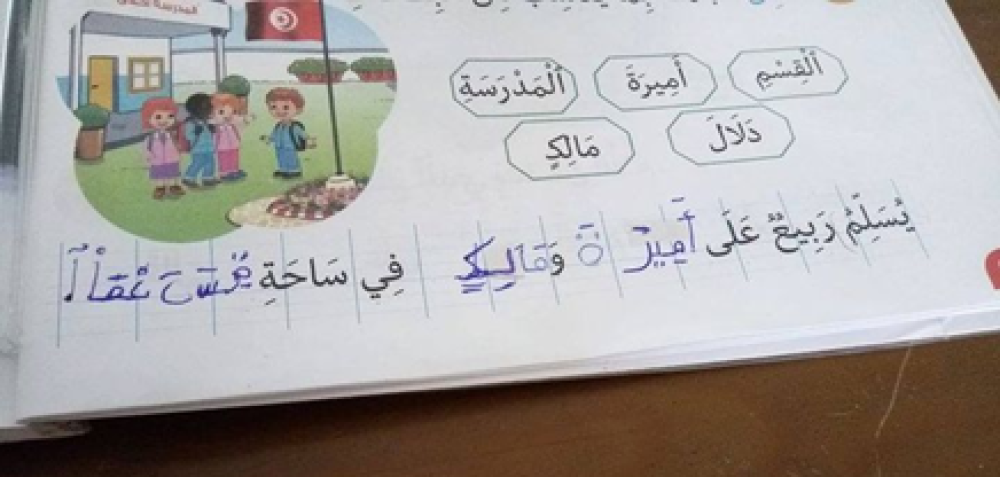
Parents, primary school teachers, and those who teach the beginnings of writing notice that many children write words backwards or may reverse some letters. Is this evidence of dyslexia? Are there clear reasons for this? And how do we deal with this issue?
I remember once, during a mothers' meeting, the teacher gave us pens and papers, and asked us to hold the pen and write with the hand we did not dominate. She placed some small squares and lines, and stressed the need to write inside them and on the line. I did not expect that I would feel anxious and disturbed while writing, even though I am an adult and proficient in writing. After completing the task assigned to us by the teacher, the results were not satisfactory to any of us; the handwriting was very weak, and none of us wrote inside the square, and we wrote under the line. It was difficult for us to control the pen because our hand that we did not dominate was not trained and was not used to this process with the weak hand.
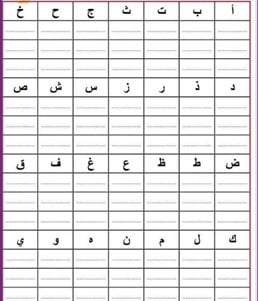
The process of learning to read and write is a complex and intertwined process preceded by many successive stages, some of which build upon each other. Without practicing it, the learner will not possess the tools of the language and will not be able to decipher its phonetic and visual codes, until he learns how to read and write those symbols easily.
Do not imagine that the child’s memorization of letters and their visual recognition is the basis for learning to write and read. It should be noted that pressuring the child to speed up this process before he is muscularly, cognitively, and perceptually ready may cause him many other problems, the simplest of which is writing backwards.
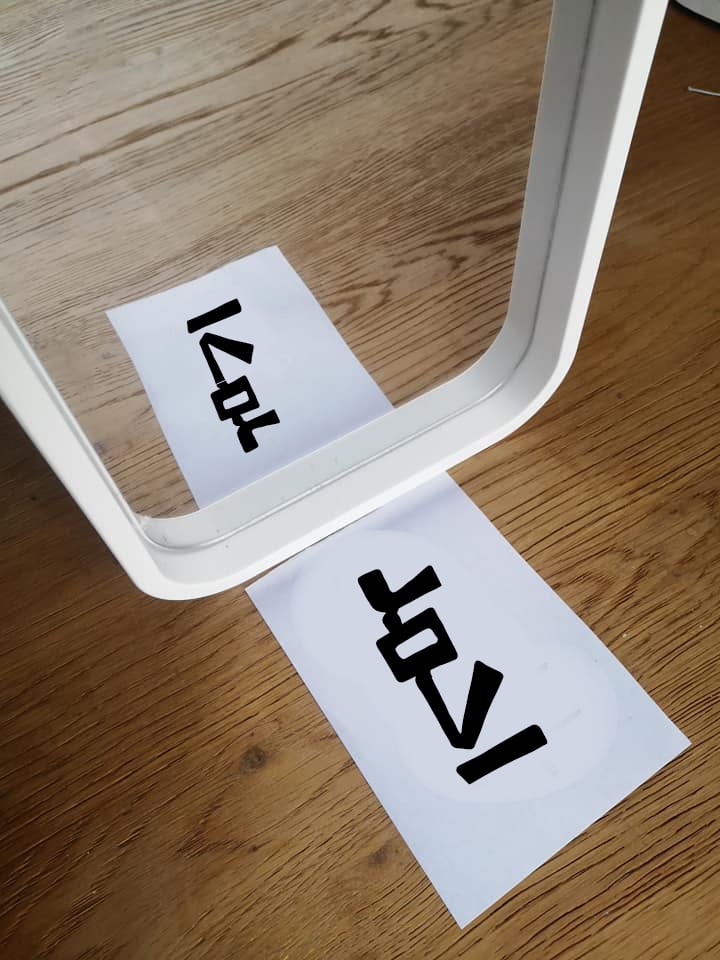
Mirror writing, as it is known by specialists, is a style of writing based on writing in the opposite direction of the original direction of writing the word, which results in a reversed image of the letter or word written. The writing appears clearly when viewed in the mirror from right to left, or from top to bottom. It may not exceed writing some letters and numbers, or it may exceed writing a whole word or sentence in reverse, which causes the educator frustration and anxiety, so he thinks that this is an indication of some difficulty that the child may face.
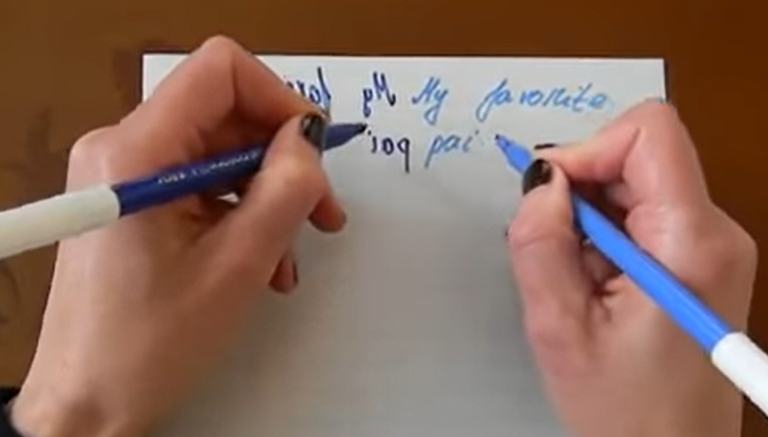
Who among us hasn't tried writing backwards, or reversing words, numbers, or letters, and trying to reverse speech intentionally or unintentionally? Haven't you tried that and considered it a kind of fun, like an entertaining game? In fact, some trainers use this process intentionally to raise the level of brain flexibility.
Although this symptom resembles one of the most prominent and obvious signs of “dyslexia,” it is not necessarily conclusive evidence of that difficulty, as there may be other possible causes, such as:
- Loss of some phonemic and phonological awareness skills such as analysis, segmentation, synthesis, etc.
And rushing to introduce letters – those abstract concepts to the child – and teaching them to him too early, before he can understand their sounds and before he reaches sensory perception of the language and can verbally understand its components and tools.
- Weak linguistic memory and training in analyzing the components of spoken language, which directly affect the early encoding and coding processes of sounds and shapes of letters and words, and how words are formed; this leads to the mixing of letter shapes and sounds in his imagination and makes the processes of searching and retrieving difficult for him.
- A lack of stock and linguistic resources of vocabulary and expressions, whether oral or visual words.
- A weakness in visual-semantic processing, which is a key element; if it is lost, the child will not be able to spell and write correctly. In this case, it is difficult for the child to identify details in words, distinguish differences in images, or the correct direction for writing and reading, and to understand the correct context for writing letters.
May I ask you a question?! Which way does the opening of an Apple apple face? Is it on the right or the left?
We may remember or we may not, because this information is not fundamental in the brain; therefore, without looking at it, we may get confused, and the same thing happens with children, so they get confused about the direction of writing.
Based on the theory of generalization, children do not distinguish between inverted shapes between the ages of four and eight, but rather excel at generalizing acquired experiences, and are naturally inclined to do so with sounds, pictures, shapes, and actions; and this is where mirror writing or what is called “Mirror generalization” arises.




A cat on the right or left remains a cat to the child, and a duck remains a duck regardless of its direction. The child does not focus on the direction as much as he focuses on the thing itself and the correctness of the shape, since most things in nature around the child do not change their shape: such as trees, butterflies, and animals, because they look the same from both directions. The child deals with letters and words in the same way. For the young learner, the matter requires time, training, guidance, and direct and clear instructions in order for him to be able to know and master the direction of those abstract symbols and shapes that are called “letters and words”.
Reversing letters, numbers, or even words, and sometimes sentences or mirror writing is not necessarily a sign of dyslexia. The reassuring thing is that most children who reverse words and letters before the age of seven are able to read and write easily without any problem appearing, and this phenomenon gradually disappears with training and practice. I advise teachers and parents to look at this process from a different perspective, and not to consider it a mistake that the student makes, but rather a type of natural growth to distinguish between them. The ability to produce correct words in reverse is not a mistake, so do not be upset or worried, but rather be reassured, and consider it like a child falling when he takes his first steps while learning to walk. If the process of reversing and turning over continues after the age of eight, then we resort to a specialist.
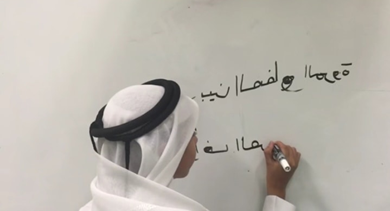
Mirror writing and reversing words is not a worrying symptom indicating a specific learning difficulty, but rather a learning stage that most beginners go through when learning to write and read.
If you encounter this:

Do not panic or exaggerate your reaction and anxiety, but deal with the matter normally; you only need to guide the child and explain to him the correct way to write and its direction.
Teach him how to write the letter; do not object or ask: Why do you read correctly but reverse the word? Do not blame him or make him feel that he has made a serious mistake, but tell him that writing has one direction and point it out clearly.
Try to understand why he reversed the word. Ask him if it was in the right direction and why he wrote it that way. You will often find that he is confused and not sure of the correct direction, just as you were confused and doubted the location of the opening of the apple. Sometimes it takes us time to learn the direction of opening a medicine box or a round door handle, for example. It requires practice to do this process and understand it automatically. The same applies to the direction of writing. The more the child practices the process of reading and writing and points with his hand while reading in the correct direction, the more he will be able to overcome this problem.
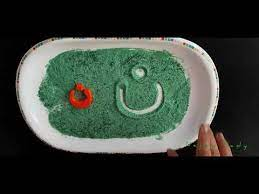
Use sensory methods in training, such as writing with dough and sand, and play some games with him, such as searching for reversed and correct letters or words. After the sensory stage, start with the method appropriate to the child’s age and level, using paper and pen. Never start with a thin pen. Do not start with a line, a square, and a small space. Start with a white sheet of paper and a wide space, then introduce the line and squares, as the child feels nervous about writing on the line at the beginning.
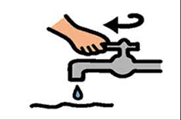
There is another matter: when we teach a child to open and close a tap, he will know that the two operations are opposites, but through them he will know how to use it. He learns at the same time the operation and its opposite, “opening and closing the tap.” The same applies when acquiring the skill of writing. There is room for both models: normal writing and reversed writing; but we only use the model in one direction.
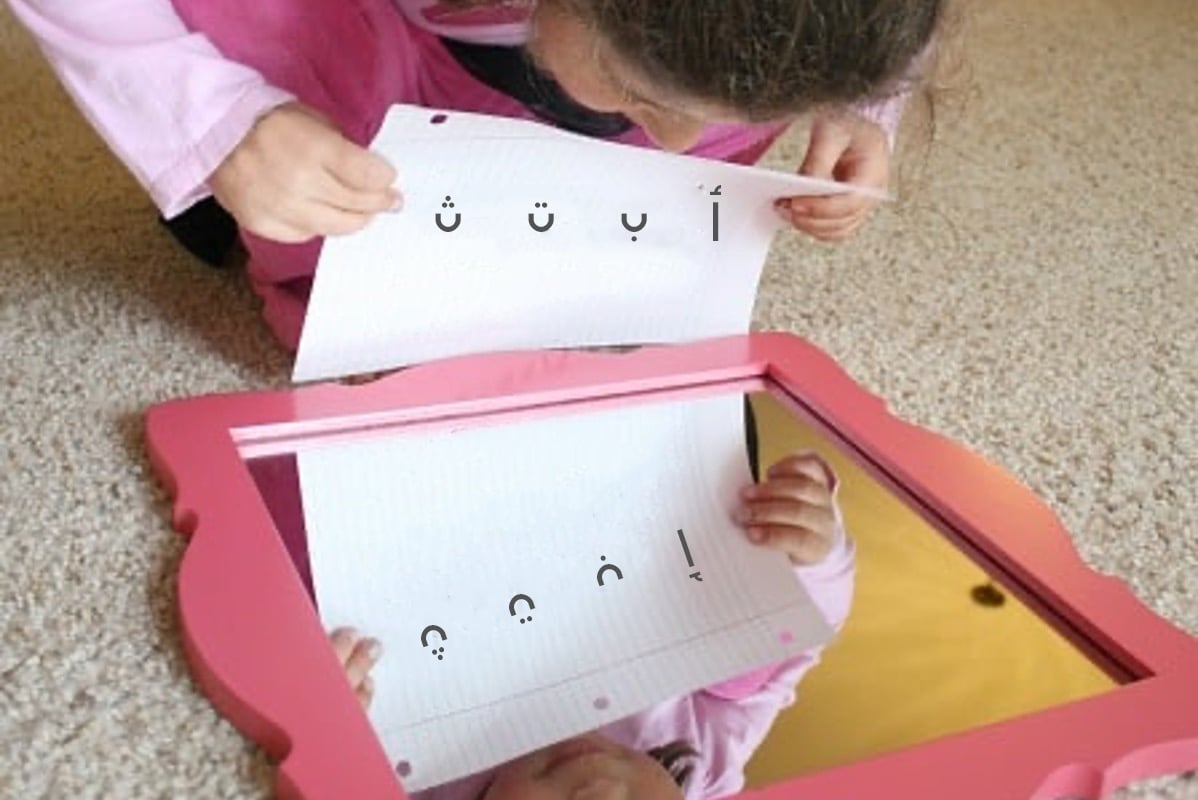
Let the child compare the words and discover and realize that the opposite shape of the letter is not understood by others; therefore, he will abandon it and realize how to write so that everyone understands what he wrote.
Finally, I should mention that a child learning two languages with opposite writing directions, such as Arabic and English, may delay the process of understanding the direction of writing in him. Every child has his own learning schedule, so do not compare or pressure, and be patient and understanding.
Do you want your child to stop reversing letters?
Follow the Educators website regularly to get educational activities and stories prepared by the experts at Dar Al Tarbayoun to help children develop their reading and writing skills.